
The Regenerative Force of Fire
- Author(s):
- Rosa Kirk-Davidoff, Caitlin Churchill
- Issue:
- Fire (July 2026)
- Department:
- Interviews
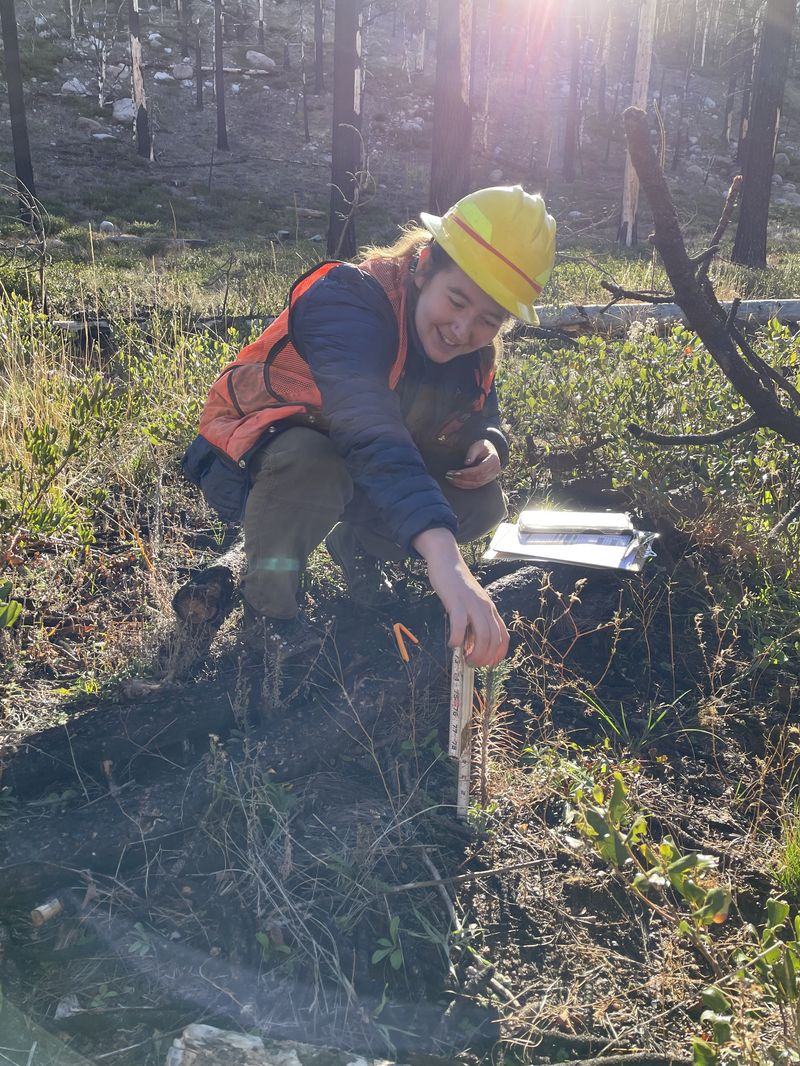
This interview has been modified for length and clarity.
Caitlin: Could you introduce yourself and tell me what your master’s is in?
Rosa: I got my master’s in Ecology from the University of Nevada, Reno, specifically in the Ecology, Evolution, and Conservation Biology (EECB) program. I’ve lived in Reno for three and a half years. I grew up in Maryland, did environmental studies in undergrad, and then moved around doing conservation corps work in Tennessee and Colorado, where I was trained as a wildland firefighter before moving to Reno for a research position. I would like to keep working in fire ecology now that I've graduated.
Caitlin: How did you come to know the Religious Society of Friends?
Rosa: I attend the Reno Friends Meeting now, but I have a lifelong relationship with Quakerism. My mom’s dad is a “birthright Quaker” from an old Pennsylvania family. My parents also sent me and my brothers to a Quaker summer camp in Virginia called Shiloh Quaker Camp. We did daily meetings for worship at camp and “Extreme Meeting for Worship” on backpacking trips. That camp didn’t just shape my relationship with Quakerism; it formed my relationship with the outdoors. It taught me to be contemplative, to notice things, and to appreciate nature in the moment, rather than focusing on competition or how fast I could hike. In high school, I was part of the Baltimore Yearly Meeting’s youth group, in which we ran our own conferences. That was a really cool experience in Quaker process and decision-making. As an adult, I attended meetings in Missoula and Chattanooga before moving to Reno, where I really value the community and the intergenerational connections.
Caitlin: How did you become a fire ecologist, and was there a moment you felt called to this vocation?
Rosa: In 2019, I had a summer job at a fire ecology lab in Montana. We looked at recent fires, counting seedlings to see how forests regenerated. I remember my first day of fieldwork, walking into a high-severity burned area. It was dramatic—all these black, dead trees, but with bright green fireweed growing underneath. Seeing that contrast and observing all the new life returning was inspiring. Later, during my time in the conservation corps in Colorado, I was trained as a wildland firefighter. We went on a few assignments in Oregon, but I found that being a firefighter is essentially being around a lot of death. However, when we went for a training hike in a burned area, I saw all those little seedlings again and got so happy. That regenerative force is what really drew me to the field.
Caitlin: What was your thesis about?
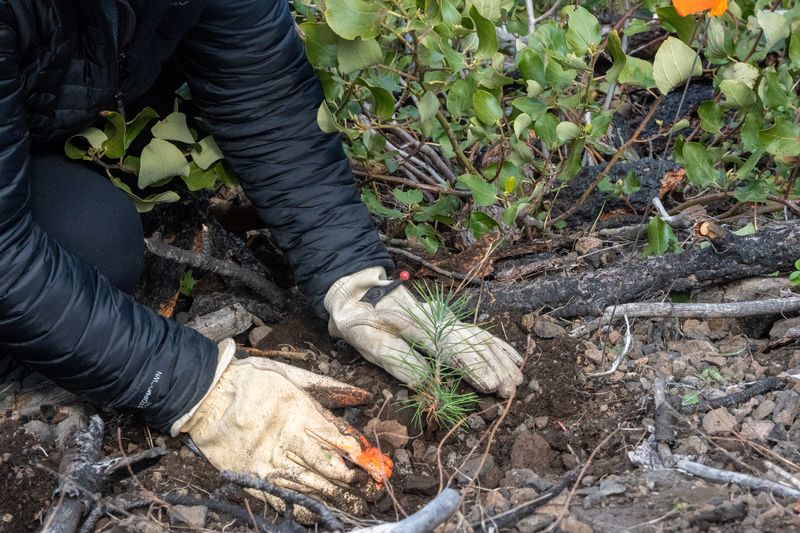
Rosa: My project looked at whether we could use shrubs as “nurse shrubs” to plant seedlings under in high-severity burned areas, rather than removing the shrubs. It improved seedling survival because the shrubs reduced the temperature by about 10 degrees Celsius, increased nitrogen in the soil, and provided physical protection from herbivory. It follows the “stress gradient hypothesis,” which suggests that as environmental conditions become more stressful, plant interactions tend to be more facilitative rather than competitive.
Caitlin: What are the specifics of your work, and what interests you most about fire ecology?
Rosa: My work focuses on post-fire regeneration. Within the fight against climate change, wildfire feels like a more tractable problem and I like that it combines social science with biological science. To protect people from wildfire, we have to talk about values—people care about the trees in their landscape. It’s about finding the balance between thinning forests to protect communities and maintaining the natural beauty people cherish.
Caitlin: Do you have a spiritual connection to the element of fire?
Rosa: The motto of the Baltimore Yearly Meeting camps was “Fire at the Center,” referring to the campfire around which we held our evening meetings for worship. I spent a lot of time as a kid sitting in silence, staring into the flames. As a scientist, I’ve stopped using negative metaphors for fire—like “ravaging” or comparing it to monsters—because fire isn’t an entity with negative intentions. It’s a natural process that evolved with these landscapes. Historically, many of these forests burned every 10 to 15 years through lightning and Indigenous stewardship. Our goal as land managers should be to restore that healthy, positive relationship with fire, where it clears the understory and leaves the forest thriving.
Caitlin: What do you think Friends in the West need to know about fire ecology?
Rosa: Beyond individual defensible space, I’m interested in community wildfire preparedness. It shouldn’t be individualistic; it should be about neighborhoods working together to clear brush and look out for each other. Building those interpersonal relationships before a fire happens is crucial for evacuation and recovery, and the strong communities formed at Friends Meetings can be part of that process.
Caitlin: Can you talk about being trained as a wildland firefighter?
Rosa: It involves classes on firefighting skills, fire behavior, weather, leadership, and teamwork. There are also practical skills like using tools and deploying fire shelters, and a physical “pack test” where you hike three miles with a 45-pound pack. You’re always learning new skills and earning certificates. I was part of a women’s fire crew, which provided a great support system. Being a woman in a male-dominated field can be tough, but having other women as mentors and teammates made a huge difference, whether we were learning to use chainsaws or dig fireline.
Caitlin: What are your plans now that you have your master’s?
Rosa: It’s a bit “to be determined,” but the first step is getting my thesis paper published in an ecology journal. I’m applying for jobs related to community wildfire preparedness and science communication. My preference is to stay in the West so I can keep working with wildfire.