
Letting me be, but not alone
- Author(s):
- Rai Carter
- Issue:
- Our Beloved Dead (September 2025)
- Department:
- Inward Light
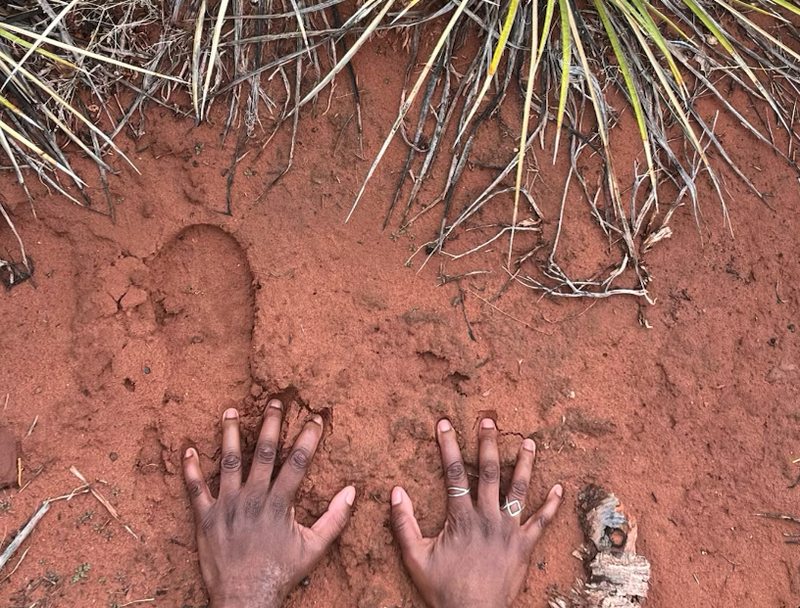
“Dinner was fun,” Isaiah beamed, hopping down my front steps. He looked back at me. “I'll text you the next time I come in from Lancaster.”
I waved him off from the porch as he put on his helmet and slowly rode off on his motorcycle toward our parents' neighborhood. “Be safe. I'll see you soon,” I called.
The next morning, September 19, 2023, he died in an accident riding to work. A motorist turned when she shouldn’t have, crossing Isaiah’s path. They passed shortly after.
It's hard to describe all the layers of our relationship. The words available don’t capture the complexity of our connection. Isaiah was my lifelong best friend and former partner. We had known each other since we were five and six, growing up across the street from one another on a block where all the families were close. For more than 20 years our lives were intertwined. We shared a community and experienced changes together—as childhood friends, neighbors, chosen family, former bandmates, and life partners. We discussed if marriage was right for us and how we would care for the new small children that had suddenly cropped up in our community. He was the person I did life with. Isaiah held a place in my heart and my family. They showed deep kindness to everyone they met along the way.
That day, I received an unexpected call from Isaiah’s aunt. I drove to our neighborhood, holistically in disbelief. "I'm not really understanding the words you're telling me," I said into the phone, my voice underwater. Coming home meant going to both our houses. I parked outside my childhood home, where my parents were huddled outside with some of the neighbors. My mother's blank face and my dad's hesitancy to receive me felt like the non-answer, answer I dreaded.
I still haven’t fully internalized that Isaiah is no longer here on this earth. We went through periods where we didn't see each other and times when we talked constantly. I trusted that there was no need for urgency to connect and that we had so much time to find the next rhythm of our relationship. Even now, I can feel comfortable with the silence, but there are moments when my body knows this lack of being is forever, and my heart pounds in my chest.
For our whole lives, Isaiah and I learned how to navigate myriad dynamics between our families and friends. Now, I stood unexpectedly alone. Who will crack the first joke at dinner? How will I get invited to the family birthday party and know what to bring? Who will I call for advice on my long drives from work? In the collective grieving process, new dynamics arose and there was no one to navigate them with me. I wasn't angry that he had passed but I felt an urgency to get the stories and memories ‘right’. As people gathered over the next few days, weeks, and months to share about Isaiah, I wanted to feel comforted by their company. But I found myself internally frustrated, asking, “Do we know the same person?”. I often felt that what others were describing was missing something that felt so essential to me. I came to understand that not all of who I knew Isaiah to be could possibly be acknowledged in the words, stories and quips that we had available. What I wanted was missing and could never be replaced.
The support that made a difference was letting me be, but not alone. A dear friend, Liv, started coming over. "I'll just be here in the house," she'd say gently. "I'll let you know it's around dinner time, but you don’t have to eat." We colored, knit, and sat in silence as the hours went by. I greatly appreciated their easy presence. They didn't force me to make decisions and joined me wordlessly in my mindless activities. My tears would roll down my face as I tried to say something inconsequential about the weather, and I appreciated them for not leaping for the tissue box. They sat gently; ever present to the self I could muster that day.
People would reflect back to me, "It seems like you're no longer crying every day and you're eating and sleeping again... you're much better now and maybe even fine. You're still yourself." But over the past few months, I had lost the person I was before. A new truth had taken root: I can’t trust that I will see you later, and while I don’t know for sure, I can be with you now. I had begun to take in the finiteness of being with people. I couldn't hide my feelings as well as I used to. I no longer have the energy to hide my sadness, anger, or confusion. I move so slowly. On the outside, I was more or less the same—working, trying to respond to messages, going to the grocery store—but on the inside, I am different. People expect me to interact with the world in ways I just can’t anymore.
I am still getting to know myself all over again. I feel like a toddler learning to take my first steps. My limbs feel too big for my body, and my life feels too big for the small capacity I have. My only constant is my unpredictability. This new me tears up at the sight of almost anything, can't be in large crowds, and is regularly overwhelmed by loud noises. I am now a connoisseur of cheap crafts and enamored with old vintage trinkets. It is a challenge to find myself alone, rebuilding a new sense of identity.
A couple weeks later, I settled into a worn wooden bench, the cool of the air coming in from the Meeting room doors that had just closed behind me. Meeting was beautiful a place to pause, meet my feelings, and slowly bring up the unanswered questions that regularly lingered below the surface of my days. This accompaniment created a spacious opening for me. I felt relief as the minutes went by and I could cry silently without being the center of attention. I felt both witnessed and not fussed over. No one was trying to answer the unanswerable. I appreciated the attempt to embrace the lack of answers and all that might never be known. If there was an answer, no human would be able to name it. Only God, Spirit or the Divine could say. That hour was a place of respite.
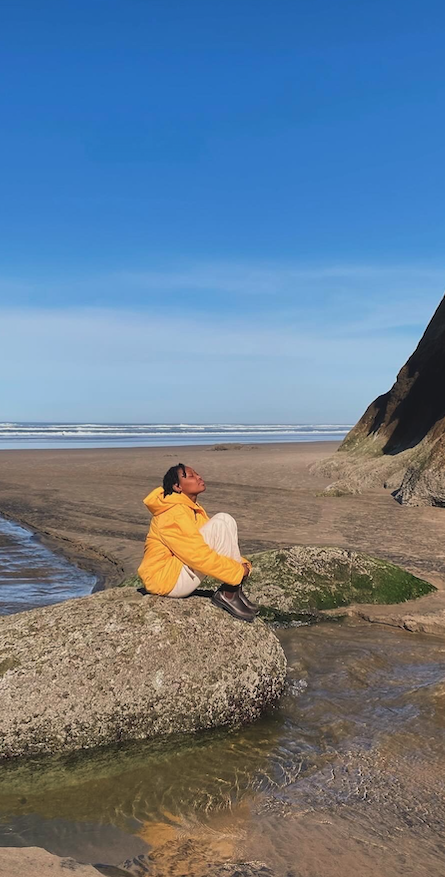
A few more months went by, and spring brought many anniversaries I had little energy to face. I struggled to process my grief at home, as even small interactions caused me to shut down. I held a deep belief that I couldn't be with people and in a heightened emotional state. Woody, a friend who knew grief well, encouraged me to spend some time out West. She took on the labor of making the trip happen. Her effort made me willing to try. She looked at me from the driver's seat as my eyes blurred with tears. "I think I can hold this with you and maybe it could be fun." We drove through Oregon, Idaho, Utah, and Colorado on a long road trip.
We started at the Oregon coast. The drives were long, and the time allowed me to not try to fill all that space with something. I spent many nights and early mornings listening to the ocean, which was loud in a way that felt expansive and answered the wordless roaring inside me. I could be on the beach alone and feel drowned out and met at the same time. I could experience my feelings in public with privacy, which brought me comfort.
I spent much of the trip thinking about the rituals of nature. That year, spiritual and religious events like Ramadan, Passover, and Easter happened concurrently, all organized around nature's cycles. Being away from the city helped me notice how people have historically aligned their lives in rhythm with the earth. In the absence of my own equilibrium, I felt invited to slowly catch the beat of the aliveness around me.
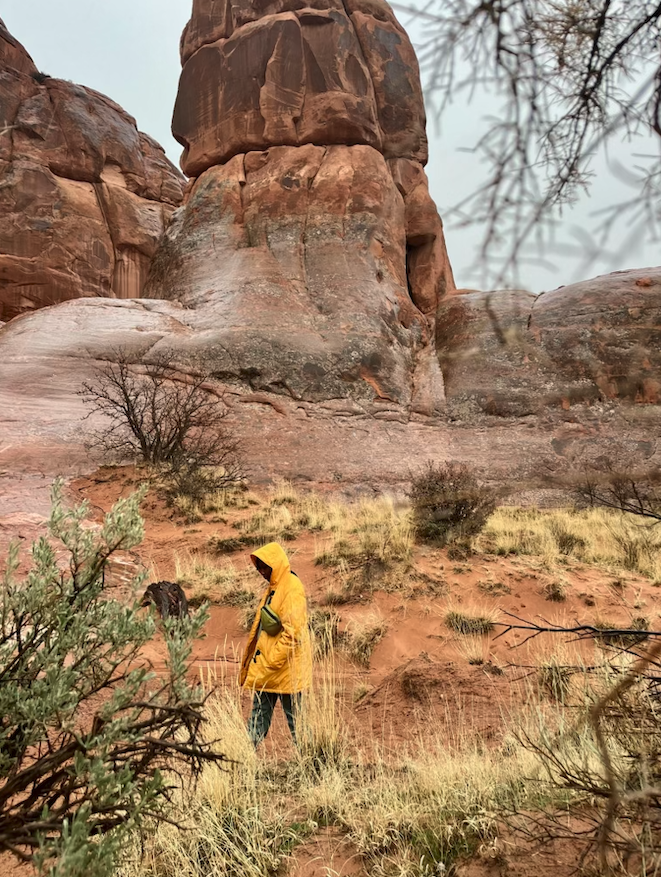
The land started telling me about my own internal experience. We visited a hot spring where it was 80 degrees, and two hours later, we were up a mountainside as snow fell. An hour later, heavy rain would cascade down the road as we descended the ridge. I was transitioning as fast as these environments were. In these new spaces, I felt awe, an emotion that had felt distant in my recent grief. Awe was a gentle welcome to witness. “We’re just letting this beautiful mountain in the middle of town not distract us from driving and drinking our coffee?” I said, sipping the first cappuccino of the day at a local coffee shop. Woody laughed at me and took another sip. Both emotions were there, like the mountain in the middle of town. I appreciated that awe was rising in my naturally, without force. The following days buzzed by, and I found myself experiencing a small taste of joy once again. The vibrant red rock at Arches National Park in Utah reminded me that even in loss, life can be vivid. As the miles ticked up on the odometer, the size of my world expanded.
On our last night, we stayed in a hillside earthen home. It was a full moon. I sat on the edge of the property, the cloudless night sky bright above me. I whispered my hopes, blessings, and fears into the night air and thanked the moon for its presence. There was a small opening in me, and I was grateful for all the silent lessons and invitations into hope the trip had brought me.
The public lands and wild spaces of the West invited me to find new ways of being. Even now, I sit in the wooded places near my home, reminded that wholeness is close. My life has expanded around the grief that has taken hold, and I am regularly appreciative of the joy, awe, and silliness that have shown up. While my life looks different now, the color has been brought back, and I have a deep appreciation for the moments I have the privilege of experiencing with the ones I love. I honor and look for the bright spots that have formed around me.
Rai Carter (they/them) lives in the Mount Airy neighborhood of Philadelphia. They are the STRIDE Coordinator for the Baltimore Yearly Meeting, and the Philadelphia coordinator for Quaker Voluntary Service (QVS). The core of their work is creating transformative experiences for young people.